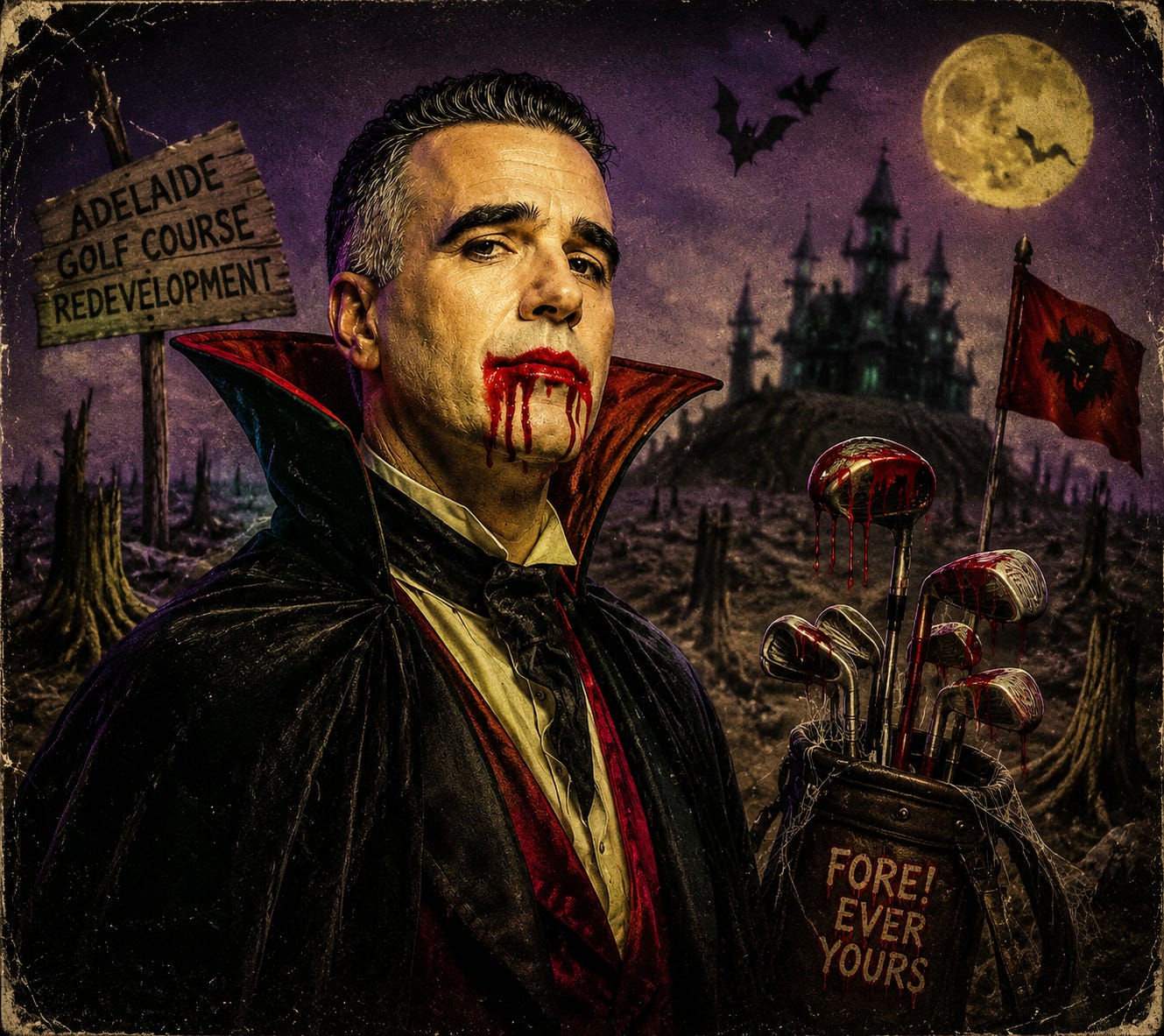
Peter Malinauskas Has Broken South Australia’s First Promise
Alex Vickery-Howe drives a wedge into the North Adelaide Golf Course redevelopment by raising the values of the past.
Over the past few weeks, our newsfeeds have included the disturbing sight of animals being forcibly removed from Adelaide’s public parklands. Many of these territorial species cannot be safely relocated; many others will simply be killed as their homes fall.
The $45 million golf course redevelopment in the Adelaide Parklands has begun, despite repeated protests opposing the felling of more than 500 trees. The hypothetical optics have been negative for some time, and now we have our first concrete images of how the destruction of public land actually harms Adelaide’s wildlife.
Last month, eight protesters were arrested by South Australia Police. These arrests followed a large public gathering outside Parliament House and a series of sit-ins by Kaurna custodians and community groups.
A statement issued from Kaurna Yerta Aboriginal Corporation Chairperson, Tim Agius, acknowledged the tension surrounding this redevelopment:
Pirltawardli is a site of profound cultural and historical significance for Kaurna people. It is recognised as an important place connected to Kaurna language, culture and early colonial history, including being one of the first locations where Kaurna people were displaced and taken following colonisation.
Explicit in the negotiations around the golf course expansion is the possibility that conducting works in Pirltawardli (‘brushtail possum home’) will plausibly disturb Kaurna ancestral remains. Agius has been unequivocal about the Kaurna people’s expectations on the South Australian Labor Government and Premier Peter Malinauskas:
Kaurna cultural heritage monitors will remain involved during works, and the State Government has committed to avoiding disturbance to any ancestral remains. Should any remains be uncovered during construction, works are expected to cease immediately to allow for appropriate cultural protocols.
While they may have believed their recent election win shielded them from their sharpest critics, SA Labor is rolling the dice on a venture with increasingly shaky foundations and rapidly discovering that the reputational risk outweighs their imagined reward.
The Premier’s Gamble
The cultural threat the North Adelaide Golf Course redevelopment poses seems increasingly unpardonable given LIV Golf’s rapidly declining interest in South Australia. The Saudi-funded tournament has a cashflow problem, with the LIV league losing hundreds of millions of dollars across 2022, 2023 and 2024. The league’s major financial backer, Saudi Arabia’s Public Investment Fund (PIF), announced it will withdraw its financial backing of LIV Golf after the 2026 season. It’s almost like the Malinauskas Government has burned its political capital on a dodgy partnership.
Malinauskas himself may feel that he has a mandate to push the LIV Golf agenda, believing it represents an economic opportunity for the state. The Premier enjoyed a decisive electoral victory in March, with the uncomfortable caveat that Pauline Hanson’s One Nation party torpedoed into South Australian politics, gaining ground in areas that would previously have been ruled untouchable. Hanson’s rise divided the right-wing base, allowing the Premier to return to power with little pragmatic opposition. Malinauskas remains a popular leader, but popularity waxes and wanes. The mood of the electorate can never be taken for granted.
Ask the South Australian Liberal Party.
The Landscape
So far, the public criticism towards the Premier’s pact with LIV Golf, as reported in local media and online forums, has chiefly taken one of three well-worn paths…
Firstly, many South Australians have highlighted the dubious ethics of working so closely, and subordinately, with the Government of the Kingdom of Saudi Arabia. An absolute monarchy with a shocking record of human rights abuses is a strange business partner for a ‘progressive’ Australian political party, and it points to a deeper rot as outspoken critic of the Premier Stewart Sweeney warns:
When Park Lands governance is overridden by legislation and state power—when the public estate is carved up to meet the priorities of a global sporting brand—the issue is not whether one likes golf. It is what it tells citizens about who ultimately owns the city.
Secondly, the environmental aspects are justifiably upsetting. The impact on animal habitat—and the Labor Party’s cruel disregard for any species that can’t swing a 7-iron—deserves some airplay. Part of what makes Adelaide such a beautiful and welcoming city is the green space and the care taken to maintain it.
Thirdly, the fact that the Malinauskas Government is refusing to consult with anyone, and going so far as to break its own Ministerial Code of Conduct to push this redevelopment through, should alarm voters. This will soon be tested in the Federal Court thanks to the bravery of environmental advocate and concerned citizen Edwin Kemp Attrill.
Greens MP Robert Simms captured the mood in State Parliament best:
Giving Labor more power over the Parklands is like giving Count Dracula the keys to the blood bank. They see the Parklands as a land bank, and they are going to continue to sink their teeth into them*.*
Adelaide City Council, who have managed the North Adelaide Golf Course for more than 100 years, are likewise incensed. Waiting until Lord Mayor Jane Lomax-Smith was overseas championing Adelaide’s bid for the COP30 Climate Conference, the Malinauskas Government froze the council out of negotiations as early as mid-2025. This prompted acting Lord Mayor, Phil Martin, to publicly chastise the Premier:
It is unacceptable for the Premier to leave Council out in the cold in the middle of such negotiations. I do not agree that our ongoing involvement would drag the process out to make the event unviable. What is unviable is for the government to intervene by using legislation like a sledgehammer when we are in the middle of discussions.
The arrogance with which Minister for Planning, Nick Champion MP, addressed widespread political and public disapproval on ABC’s 7.30 was equally misjudged. ‘These people who make these criticisms want to snowdome Adelaide,’ argued the minister. ‘They want to keep it for a very, very privileged few.’
Counterpoint: it’s public land, Nick; it belongs to everyone. ‘Privilege’ doesn’t come into it.
With Pirltawardli now being cleared for a speculative investment in an event with no guaranteed economic future, and with the footage of animals in distress spreading rapidly, all three of these criticisms are likely to get louder over coming months. Fending off his detractors, Liberal and Green alike, a wrongfooted Malinauskas has made it clear that ‘the government does not owe LIV anything’.
But what do we all owe the Kaurna people?
This leads to the fourth path of criticism regarding the Adelaide Golf Course redevelopment, and it is the end of a story as old as our city.
The Promise
To position the present stakes of the North Adelaide Golf Course redevelopment, and its context as part of a wider historical narrative, it’s worth stepping back into the city’s layered history—a history that began with a promise to the native inhabitants of what is now called Adelaide.
I first encountered the Letters Patent in conversation with a curator at the Bay Discovery Centre in Glenelg:
At the time, I was deep in background research for The Queen’s Wall, a 32-metre-long public artwork created by Mary Moore. The work runs along the exterior wall of the Queen’s Theatre in (aptly named) Playhouse Lane, a stone’s throw from Light Square.
It was through this work that I came to understand the significance of the Letters Patent and developed an appreciation for the ideals Adelaide was founded on, specifically the assertion that First Nations people had the right to occupy and enjoy their ancestral land.
The South Australia Act 1834 had omitted precise directions on how to establish the Province of South Australia. After negotiation with the Colonial Office, the Colonisation Commissioners drafted a key document, which was laid before the King for his sanction in Council and adopted.
The Letters Patent are formally titled ‘Letters Patent under the Great Seal of the United Kingdom erecting and establishing the Province of South Australia and fixing the boundaries thereof.’ They defined the boundaries of the new colony and were signed on 19 February 1836 by King William IV.
And they were very clear that the colony had limits:
…nothing in these our letters patent contained shall affect or be construed to affect the rights of any Aboriginal Natives of the said Province to the actual occupation or enjoyment in their own Persons or in the Persons of their Descendants of any Lands therein now actually occupied or enjoyed by such Natives.
The Letters Patent are unequivocal in that the rights of the Kaurna people were to be recognised by the Crown and afforded protection under its governance. This edict came directly from the King, and it was reiterated by Governor Hindmarsh at the Proclamation Ceremony:
It is also, at this time especially, my duty to apprize the Colonists of my resolution, to take every lawful means for extending the same protection to the Native Population as to the rest of His Majesty’s Subjects and of my firm determination to punish with exemplary severity, all acts of violence or injustice which may in any manner be practiced or attempted against the Natives who are to be considered as much under the Safeguard of the law as the Colonists themselves, and equally entitled to the privileges of British Subjects.
This was presented as the crucial point of difference between how South Australia was established, in contrast to neighbouring colonies shaped by frontier conflict. South Australia was proclaimed under the doctrine of a peaceful settlement wherein First Nations people would be treated as the settlers themselves wished to be treated. It was a foundational promise recognising First Nations peoples’ rights to respect and safety, and—yes—to land.
As I explored this material, I found it strange that the Proclamation Ceremony by the Old Gum Tree was invoked in our visual art and our public rhetoric, but rarely honoured or upheld in practice.
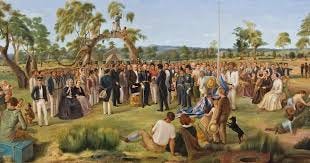
In 1966, Don Dunstan, as Minister for Aboriginal Affairs, introduced the Aboriginal Lands Trust Act and cited the promise of the Letters Patent, which he regarded as unfulfilled. Forty years later, Jay Weatherill, acting in the same ministerial capacity, drew attention to the document. These were Labor politicians who understood their office. For the majority of South Australia’s history, it is nevertheless true that successive state governments have been shy to acknowledge the implications of how our colony was originally framed.
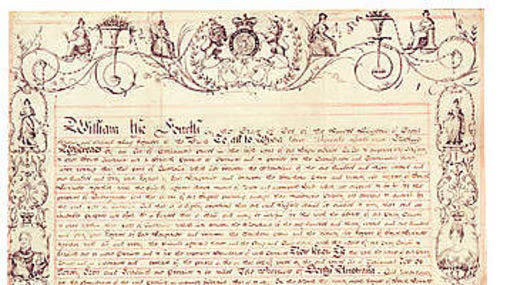
What was actually declared that day by the governor on behalf of King William IV hasn’t really pierced Adelaide’s public consciousness. We enjoy the ‘we’re free settlers’ catchphrase without embodying the responsibilities that tag implies. Adelaide was built on a clear promise.
The Significance
Here’s where things get especially interesting…
Pirltawardli, as Kaurna elder and traditional owner Tim Agius has outlined, is an important sacred site for the Kaurna people. At the time of first European contact in 1836, the north bank of the River Torrens was acknowledged as their camping ground.
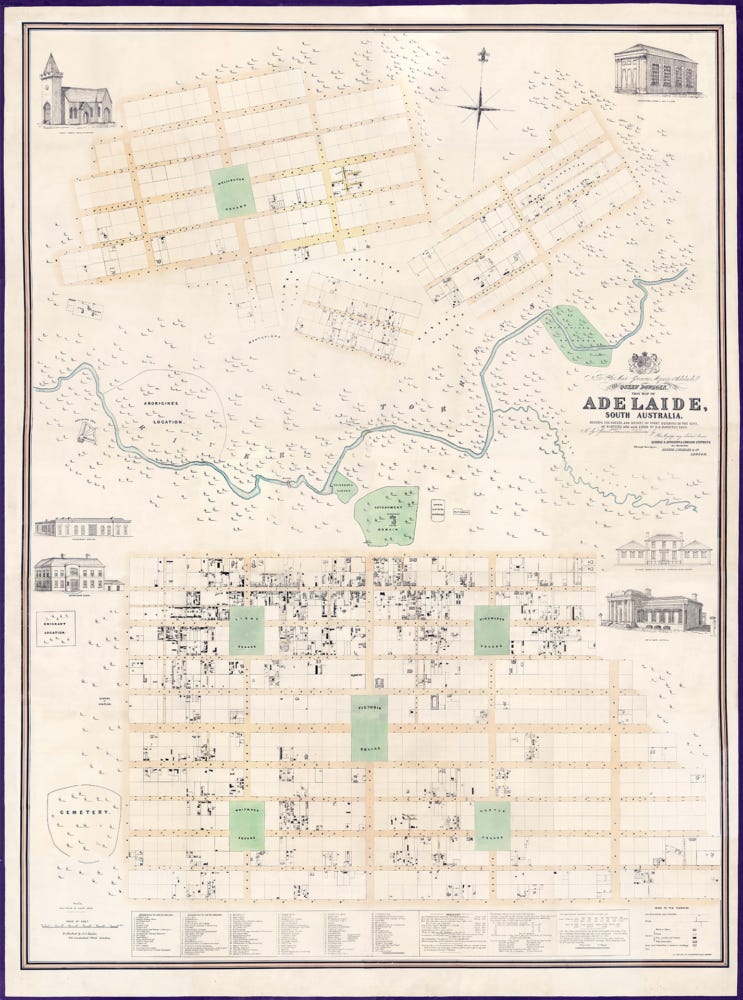
The area shown on Kingston’s 1842 map as the ‘Aborigines’ Location’, north of the river, coincides roughly with what is today the southern half of the North Adelaide Golf Course. Over years, the Kaurna people have been systematically moved off this site. By the late 19th century, the Kaurna presence had been reduced to a small fringe camp at Pinky Flat before that too was extinguished.
Now, Malinauskas wants to move their bones.
If the Kaurna people have the right to perform ceremony on that land, it is a right we must honour if we are to follow the King’s word set down in the Letters Patent and in Hindmarsh’s concurrent statement at the state’s proclamation. The Premier, as the custodian of South Australia’s ongoing governance, is also bound by these moral and legal responsibilities. It would be hypocritical—and politically difficult—for the ‘progressive’ Labor Party to deny the Kaurna people access to Pirltawardli.
So…
What happens if the Kaurna people choose to perform ceremony during LIV Golf 2028?
If such an event were to occur, it would surely be a test of who we are, and who Malinauskas is.
The government’s use of the North Adelaide Golf Course Act to fence and exclude the public—including the Kaurna people—from the site during the LIV Golf tournament may constitute an impairment of Native Title rights under the Native Title Act 1993. Were the Kaurna people inclined to perform ceremony on that day, it could give rise to a compensation claim under the Act.
There may already be a basis for a compensation claim in respect to the historical dispossession of the Kaurna from Pirltawardli in the 19th century, given that the dispossession occurred in direct contravention of the Letters Patent of 1836 and the Colonisation Commissioners’ explicit instructions that no land in their possession could be taken without prior voluntary cession.
Finally—a question for Edwin Kemp Attrill’s lawyers—has the government’s conduct in passing special legislation to override normal planning protections for this commercially driven development, on a site of documented Kaurna significance, engaged the protections of the Racial Discrimination Act 1975? If so, what remedies might be available?
These are issues Malinauskas would like to dismiss. I’m not sure he legally can.
Importantly, whether one acknowledges the promise of the Letters Patent or rejects it offhand can never be a question of conflict between British settlers and the Kaurna people, because these are settler laws. We are arguing with ourselves. It is not even a question of giving ground in modern ‘culture war’ debates—it is simply a question of whether we are willing to take seriously the legal and moral foundations on which South Australia was established.
If we assert that it was our legal system and our judicial system that created South Australia, then we are bound by the promises we’ve already madeto the Kaurna people of the Adelaide plains.
It’s an interrogation of logic as much as ethics.
The Premier’s proposal is the final act of a saga that has raged since South Australia was originally founded, displacing the Kaurna people over successive generations, now culminating in the potential displacement of their remains.
This is not just a clumsy political misstep, a ghoulish land grab, or an arrogant attempt to push a deal through with minimal public consultation…
It’s a fundamental breach of the founding principles enshrined in the creation of Adelaide itself.
Picked up where you left off