
Whispers in the Wall: Confronting the Failures of a Colonial Past
Alex Vickery-Howe unpacks the hidden stories inside an Adelaide artwork.
If you take a walk down Playhouse Lane, beside the iconic Adelaide Queen’s Theatre…you may stumble upon The Queen’s Wall and you may get lost in it. The creation of visual artist Mary Moore, The Queen’s Wall is both a public artwork and a gateway to virtual worlds. QR codes placed at various points bring the artwork to life on smart devices, so that painted figures beckon viewers into their confidence. They invite passersby into the world of the theatre, as it was during the time of their stories.
The Wall is a very modern solution to the challenge of depicting South Australia’s complicated history. It could have been a static mural—that’s what the public tender called for—but across its development it became something more ambitious in scope, at 32 metres across, and in content.
From a writer’s perspective, the Wall represents an opportunity to open a public conversation and say some things I don’t think could have been said on a conventional proscenium arch stage…
If Walls Could Talk
The Wall interacts with its audience in a selection of different ways. There areactors involved, playing the static figures in the mural as they move on a guest’s smartphone or tablet, but there is also strictly audio material that functions as a podcast, where these historical figures are interviewed by the voice of a contemporary interviewer, as well as more conventional voiceovers contextualising each figure, narrated by Ulli Birvé.
Where the Wall has its major point of departure from proscenium arch theatre, and where I think the potential to go further than the traditional form landed with me after some experimentation and a few false starts, lies in the scenes where the audience is given a virtual reality perspective from the point of view of these long-deceased people.
Once you place a living actor under a spotlight and ask them to embody history, whether through a dramatised recreation of real events or a verbatim recitation of extant documents, the audience is positioned to view the actor’s performance at a remove. The actor may draw the audience’s sympathy, and bring out laughter or tears, but the audience is never asked to personally embody their perspective. To do so, they’d have to get out of their seats, step onstage and join the play. (Sidenote: I’d actually enjoy it if more theatrical shows created space for that level of chaos.)
When dealing with difficult research material, including early colonial trials, murders, massacres and sexual assaults—all of which can be readily covered in academia—the decision to place a living body on stage and then direct them to depict those challenging historical events becomes fraught. This is especially true when the events concern the interaction between European settlers and First Nations representatives. I would argue, in the current political climate, a traditional ‘well-made play’ that confronts South Australia’s history becomes a very difficult proposition. Old-school theatre has limits. Or perhaps I do.
An interactive artwork has a different relationship with its audience. That notion of a body watched from shadowy observers can be subverted, because the Wall places the spectator inside the eyes of the historical characters. The Wall offers a VR environment, geocoded from the physical wall, so that viewers can actively navigate the digital space as an immersive experience. Simply put, if you visit the Wall, you are not restricted to being an audience member seated at a distance watching an actor pretend to be somebody else; you are an active participant seeing what the historical figure sees. This, for me, is much more exciting than writing a play. It allows a creative team to dive into the really thorny, really difficult stuff.
Working with key researcher and dramaturge Julie Holledge, I was tasked with putting words into the mouths of these South Australian historical figures, including actor John Lazar (Nathan O’Keefe), who was once notorious in Adelaide for going off-script and creating bawdy improvised comedy involving carrots.
As the history of the Queen’s also included a horse bazaar and a carpark, I ended up writing dialogue for a group of bickering prize horses, and a car…because, at some point, we decided the car should talk. Props to Renato Musolino for punctuating his lines with grunty engine noise.
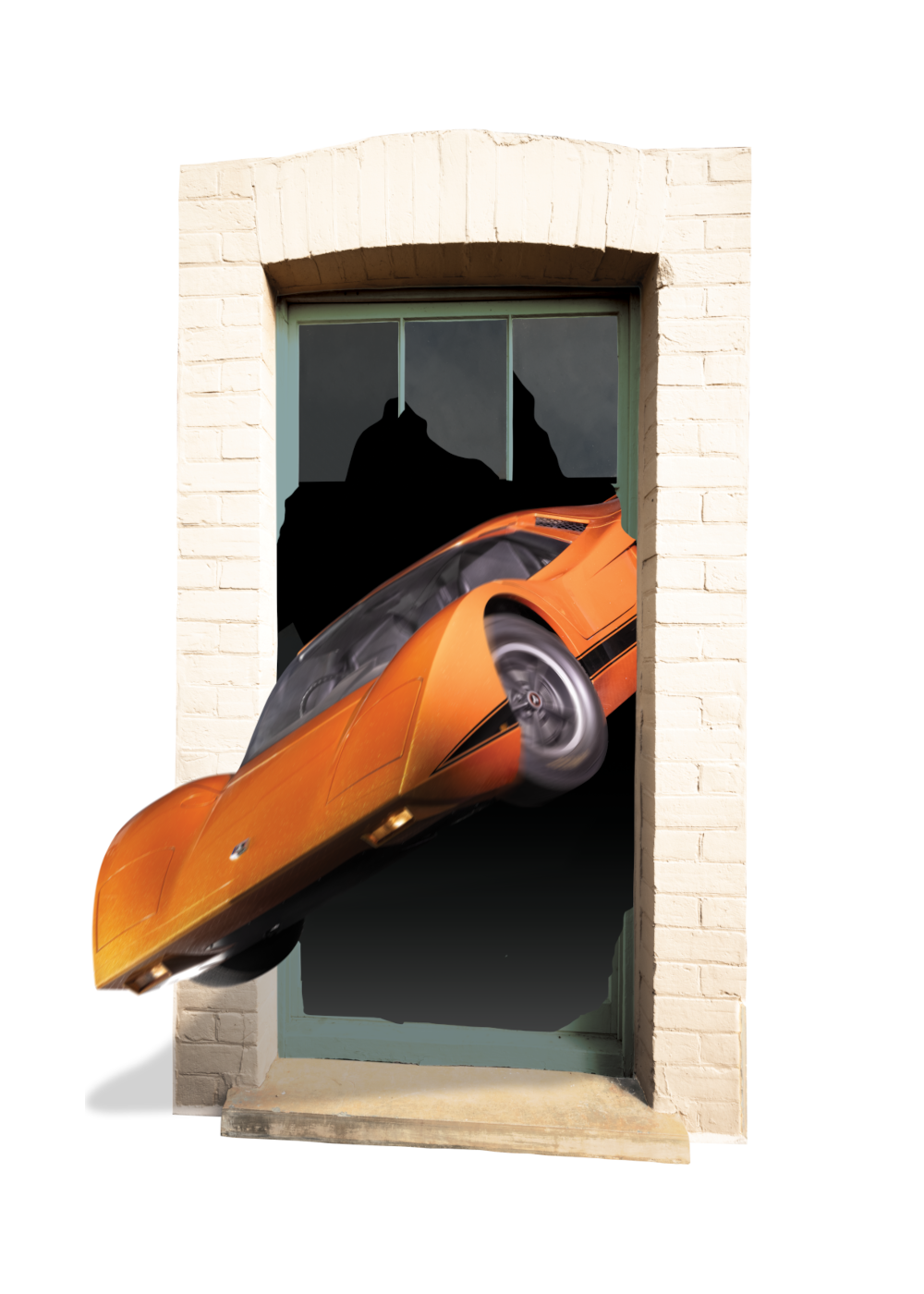
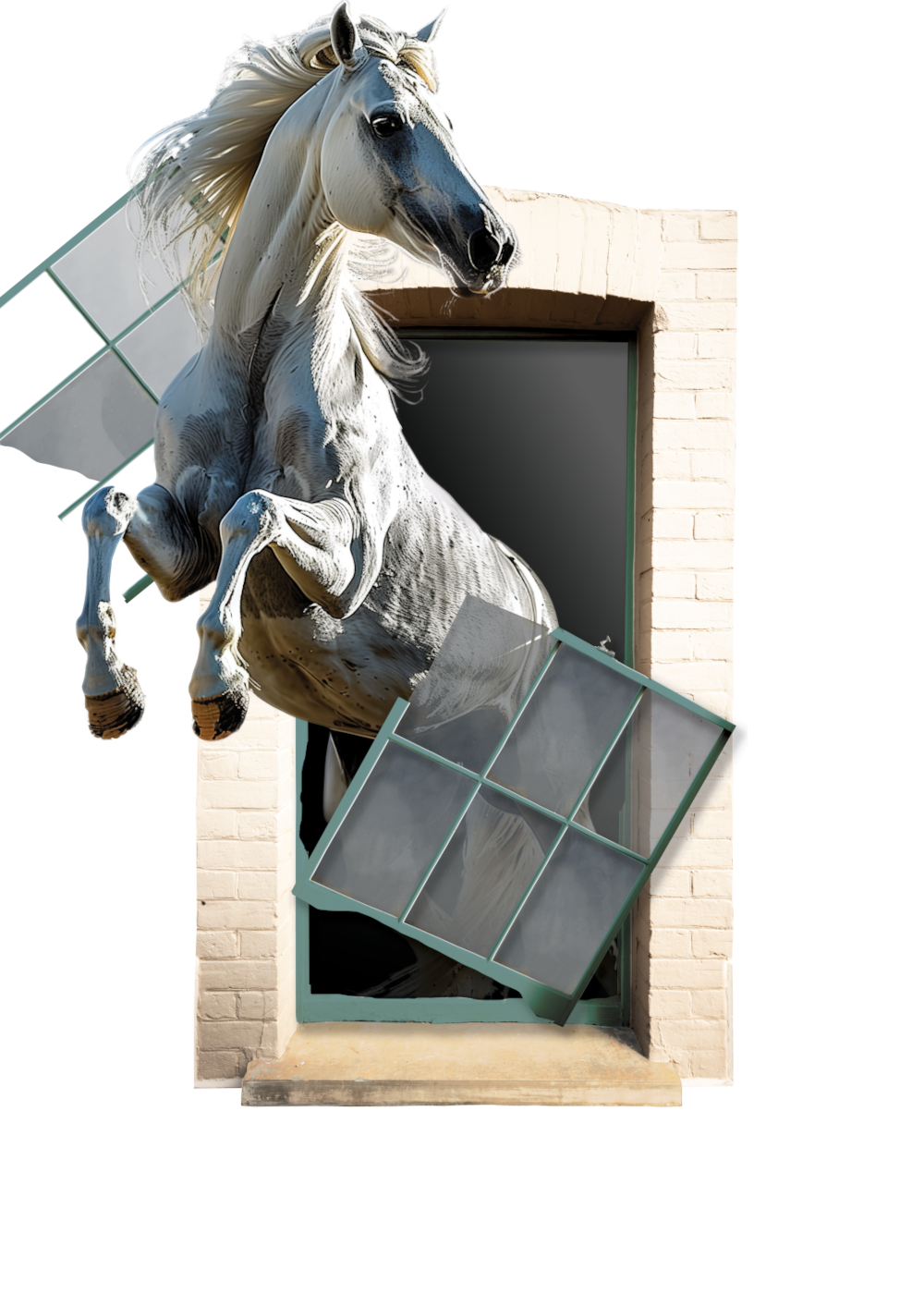
There is, however, a much more serious dimension to the work, which is brought into focus every time visitors approach the Wall by first passing Colonel Light’s final resting place. Through the artifice of the wall, we have attempted to tell something broader about the establishment of the South Australian colony, and we’ve tied a detective’s yarn between then and now.
I must pause and shudder at myself because one of the most cringe-inducing, Coco-Pop-curdling theatrical clichés is the often-quoted, frequently baseless, habitually asinine assertion that ‘this text is just as relevant now, as it was then’, which has only ever seemed defensible to me when Baz Luhrmann throws in a fish tank and a car chase…
Still, I think those words take on a different tenor when a creative work’s primary goal is to thread that needle between past and present, and when the historical record itself is so revealing.
The past is prologue.
That’s another cliché, but I think it holds up.
As Then
Drawing from the research of Henry Reynolds and Skye Krichauff, the artists behind The Queen’s Wallwrestled with how to layer the historical record into our work. From its inception, the project was a collaboration between artists of First Nations and European-settler descent. As the published historical record contradicted oral sources, the project used protocols to ensure that, when representing historical content that dealt with the relationship between First Nations people and European settlers, a thorough consultation process was undertaken with Elders or senior figures from the relevant Nations, including Narungga Nations Aboriginal Corporation CEO Klynton Wanganeen and Distinguished Professor Lester-Irabinna Rigney. The consultation process was facilitated by First Nations artist and cultural dramaturge Carissa Lee.
Beyond the consultation process, however, was the nuts-and-bolts challenge of how to embed complicated but vital pieces of South Australia’s founding history into a creative work that would be pitched to tourists and school audiences. How could we raise a discussion about the hypocrisy of our judiciary and the disconnect between what was enshrined in the Letters Patent and what is now modern South Australia?
The Letters Patent, essentially South Australia’s founding document, is something I’ve wanted to explore creatively for a long time:
The Queen’sWall never refers to the Letters Patent directly, but the notion of hypocrisy between what we, as South Australians, said we’d do and how we’ve subsequently behaved was at the core of the project. We broached this theme through dialogue and through the court proceedings we recreated in VR form. Chiefly, we chose to focus on the historical figure of Yanggara, a Narungga man who served as a court interpreter in the early days of the colony. Yanggara was essentially trapped between the political ideals of the Letters Patent and the reality of a biased courtroom.
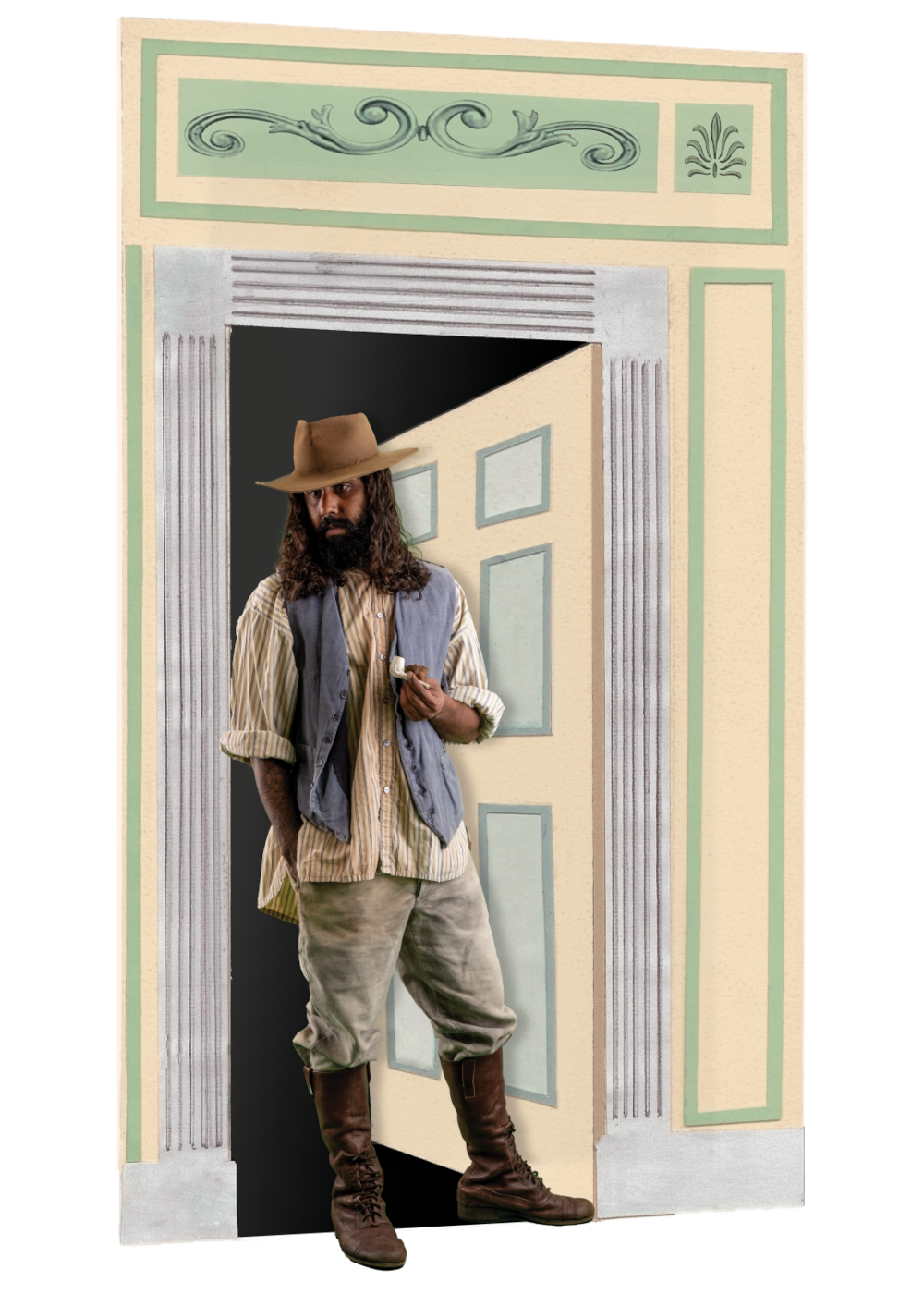
Yanggara remains a complicated cultural figure. We were fortunate that Tarnya Wanganeen, a linguist whose work is focused on the reclamation of the Narungga language, and Uncle Mickey O’Brien, a Kaurna elder, both agreed to culturally interpret, translate, and record the imagined dialogue from First Nations defendants in the Supreme Court. Through Yanggara’s story, we hoped to demonstrate the clash between the egalitarian ideals that shaped South Australia, and the utter failure of the courts and the parliamentary system to uphold those ideals.
Visitors to the Wall will see Yanggara, as depicted above, but they will also see what Yanggara sees: a courtroom in chaos; a flustered magistrate; a cross-cultural cacophony that cannot be translated.
The Wall captures the complexity of Yanggara’s perspective. Historians may debate his part in the displacement of the First Nations people, through his mistaken belief that the promise of the settlers—our promise to uphold our own laws—would stack up, but the writing does not take a position. It simply presents the problem.
A play would struggle with its positionality, offering points and counterpoints, with too many monologues and too many allegories (at least if I was writing it), but an artwork can pose the question to every visitor who shares Yanggara’s eyes.
What would you do?
So Now
Adelaide doesn’t seem to have evolved much.
The controversy over the North Adelaide Golf Course redevelopment has brought the Letters Patent, once again, to the front of my mind.
I watched with interest as South Australia’s Premier, Peter Malinauskas, described one of his most vocal critics, Edwin Kemp Attrill, as indulging in ‘martyrdom’. I wonder if the Premier will say the same of Kaurna traditional owner Janette Milera as she joins the fight to defend her land:
For Peter Malinauskas, it’s a new golf course. For me, it’s my family bloodline.
Even as the LIV Golf wellspring dries up, Malinauskas maintains that an expanded golf course will be of great economic benefit to the state. A $45 million investment is looking less and less like a sound fiscal decision, even as SA Labor secures an alternative tournament, but the Premier is not an agile politician when he feels disrespected and he may struggle to back down from a shifting public mood.
He may also struggle to maintain his ‘progressive’ reputation while engaged in a legal dispute with a representative of the Kaurna people, who is fighting to protect Kaurna land, Kaurna historical interests, and Kaurna ancestral remains. This story is shifting every day, and the Premier would be wise to shift with it.
Politically, it’s messy.
Legally, it may be clearer than Malinauskas believes…
As I’ve written elsewhere, the Letters Patent is clear on the boundaries of our colony, and its limitations: namely that the Province of South Australia shall not adversely affect ‘the rights of any Aboriginal Natives of the said Province to the actual occupation or enjoyment in their own Persons or in the Persons of their Descendants of any Lands therein.’
Milera correctly states that this particular land, Pirltawardli—or ‘Possum Park’ as it is colloquially known—is a place of special significance to the Kaurna people. It was, in fact, where the Kaurna people were camped at the time of European settlement. Given such a specific historical context, the Letters Patent could be interpreted as referring chiefly to Pirltawardli. If so, what are the Premier’s chainsaws doing there?
And what happens next, Adelaide? Are we going to obey our own laws now, or are we going to ignore them as we did in Yanggara’s courtroom?
Another Brick in the…
I’ve been fighting my subversive self to resist a Pink Floyd reference this whole time, but as a metaphor for conformity, and repetition across generations, their song is very evocative. Likewise, The Queen’s Wall is a series of portals into who we were, and who we may be again. We can break the patterns of the past or we can keep reinscribing them, over and over, making the same mistakes, breaking the same promises, denying culpability, feigning superiority, and shattering trust.
I’m not so naïve as to imagine an artwork can automatically change people’s minds. There are many reading this who just want to enjoy golf, or who are tired of feeling that Adelaideans are resistant to change. ‘Remember the bridge over the Torrens,’ a family member said to me recently. ‘We hated it then, and we love it now.’
Fair.
Others will say a middleclass writer ranting about tax-funded art is hardly the mouthpiece Adelaide wants to hear from when it comes to cultural and environmental policy.
Fair.
If I say we have an arrogant government going off-script, like a madman with a fistful of carrots, I’ll doubtlessly be pigeon-holed by Malinauskas and others as being just as ‘out of touch’ as all those bookish ‘whingers’ who made a fuss about political intervention during Writers’ Week, when all the fun people were heading to the 19th hole.
Also, fair.
So, I’ll say this instead…
What we’re talking about isn’t just golf. It isn’t just public consultation and Saudi investment, although we should keep the coals hot there and keep asking hard questions. It isn’t even trees or animal welfare, although I do personally consider those issues to be both important and heartbreaking.
What we’re talking about is the hypocrisy of European settlement. That cuts to who we are. Since we arrived in South Australia, we have said one thing, and we have done another. Maybe we could try honouring our word, if only to branch out and experiment with versatility.
It’s not a squabble over a golf course; it’s a debate about what Adelaide was meant to be and how we said we’d behave. We can remember. We can forget.
Now, we choose.
Picked up where you left off